The Palmyra Commute: What Your Car Deals With Every Day
Palmyra sits in a genuinely convenient spot — close enough to Hershey and Lebanon for local work, but a real commuting hub for people heading out Route 422 toward Reading, up I-81 toward Harrisburg and Carlisle, or down toward the Lancaster warehouses and distribution centers off Route 283. Whatever your route, you're likely putting 15,000-25,000 miles a year on your car, mostly highway miles, which changes what "best commuter car" actually means.
A good commuter sedan isn't just about MPG on a sticker — it's about real-world highway fuel economy, seat comfort over an hour-plus drive, reliability that doesn't leave you stranded on I-81 in January, and a purchase price that makes financial sense against your monthly fuel and insurance costs. Here's what we recommend most often to Palmyra-area commuters shopping at Hunt Auto Group.
We also hear a lot from Palmyra commuters who work shifts at the Hershey plants or drive out to the warehouse corridor near Lebanon Valley — for them, a commuter car isn't a lifestyle choice, it's essential daily infrastructure. The vehicles below are picked specifically with that kind of high-mileage, needs-to-just-work daily use in mind.
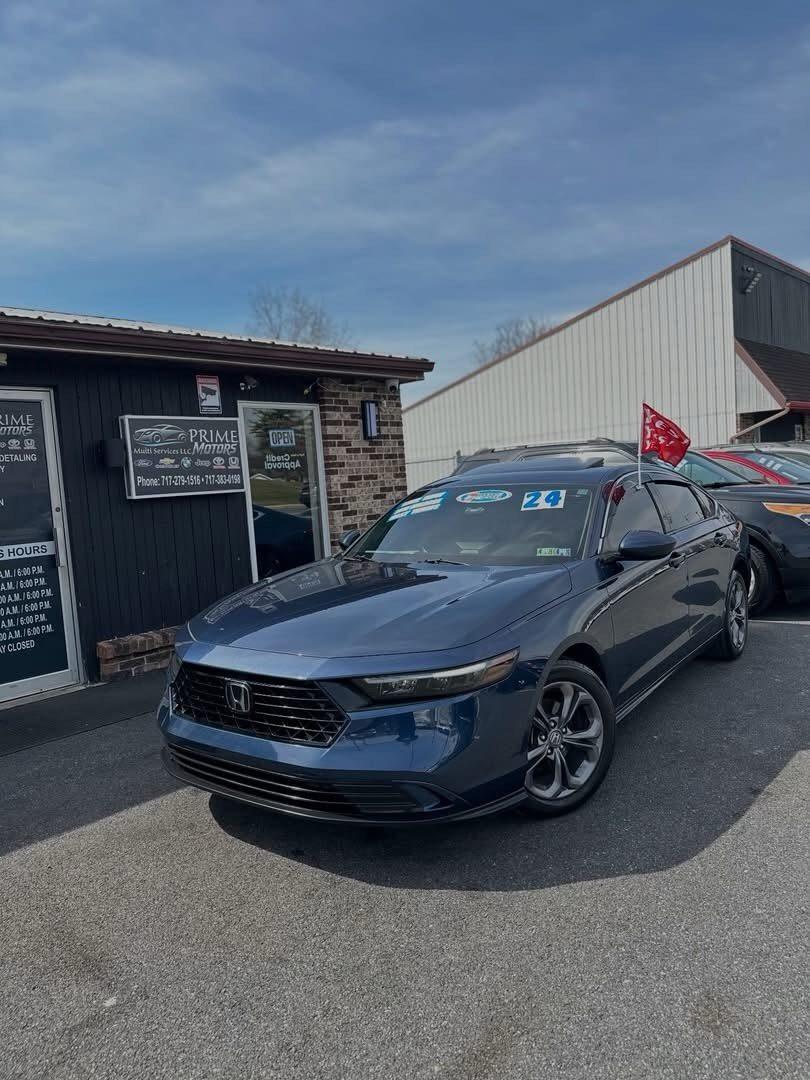
Honda Accord (2013–2020): The Gold Standard Commuter Sedan
The Accord consistently tops "best commuter car" lists for good reason — spacious, comfortable, quiet at highway speed, and backed by one of the strongest reliability reputations in the segment. The 2.4L four-cylinder (185 hp) is the efficient daily-driver choice; the available V6 (278 hp) trades some fuel economy for real passing power on the two-lane stretches of Route 422.
- Price range: $13,000-$21,000
- Highway fuel economy: 34-38 MPG (4-cylinder, CVT models 2018+)
- Estimated annual fuel cost at 20,000 highway miles: roughly $1,450-$1,600 at current PA gas prices
The 2018+ generation's CVT returns genuinely impressive highway numbers, though some earlier 2018 models had reported CVT shudder complaints — we check service history on these specifically before they hit our lot. Beyond the fuel economy numbers, the Accord's seat design is genuinely one of the more comfortable in the segment for long stretches behind the wheel — a detail that matters a lot more once you're a year into a 45-minute daily commute than it does on a 10-minute test drive.
Toyota Camry (2015–2021): The Reliability Benchmark
Camry's reputation as a reliable, low-drama commuter car is well-earned across every generation on the used market. The 2018+ redesign in particular improved handling and interior quality significantly over the 2015-2017 models while keeping the same dependable four-cylinder and V6 options.
- Price range: $14,000-$22,000
- Highway fuel economy: 33-39 MPG depending on year/engine
- Reliability: consistently among the highest owner-satisfaction scores in the midsize segment
For a commuter putting big highway miles on I-81 daily, a well-maintained Camry is about as close to "set it and forget it" as a used car gets. Toyota's reputation for holding resale value also means that when it's eventually time to sell or trade in, you'll typically recover more of your original purchase price than with most other sedans on this list.
Mazda6 and Kia K5: Style Without Sacrificing Reliability
Mazda6 (2014-2020)
The best-driving sedan on this list, with genuinely upscale interior materials that feel a class above its price point. SKYACTIV engines return strong highway economy (35-40 MPG) while still offering more engaging handling than most midsize competitors. Price range $12,000-$19,000. Slightly firmer ride than an Accord or Camry — worth a test drive to confirm it suits your commute preference, particularly if your route includes rougher sections of pavement.
Kia K5 (2021-2023, successor to the Optima)
A newer addition to the used market but already earning a strong reputation. Turbocharged 1.6L engine on GT-Line trims balances fuel economy with real acceleration for merging onto I-81. Price range $18,000-$24,000 — pricier since it's newer, but comes with more remaining factory warranty coverage, a real plus for commuters worried about repair costs. The K5's exterior styling is also noticeably more aggressive than the sedan it replaced, which appeals to commuters who want something that doesn't feel purely utilitarian.
Hyundai Sonata and Subaru Legacy: Warranty Coverage and AWD
Hyundai Sonata (2015-2019)
Like other Hyundais, the Sonata's transferable powertrain warranty (10-year/100,000-mile on many model years) gives commuters real peace of mind against major repair costs. Price range $11,500-$18,000. Comfortable, quiet highway ride that suits longer commutes well, with a spacious back seat that also makes it practical for the occasional carpool.
Subaru Legacy (2015-2019)
The only sedan on this list with standard all-wheel drive — a genuine advantage for Palmyra commuters who deal with black ice on the back roads before hitting the highway. Slightly lower highway MPG than the FWD competitors (29-32 MPG) due to the AWD system's added drag and weight, but the traction advantage in Central PA winters is real. Price range $12,000-$18,000.
Pro tip from Anthony: if your commute includes any rural stretches before you reach the highway — think the back roads around Annville or Campbelltown — the Legacy's AWD is worth the MPG trade-off. If you're mostly on cleared highway the whole way, a FWD sedan with better MPG will save you more money over the year.
The Real Math: Calculating Your Total Commute Cost
Here's how we walk Palmyra commuters through the actual cost comparison, using a 20,000-mile annual commute as an example:
- 35 MPG sedan (Accord, Camry, Mazda6): ~571 gallons/year → roughly $1,850-$2,000/year in fuel at current PA averages
- 29 MPG AWD sedan (Legacy): ~690 gallons/year → roughly $2,250-$2,400/year in fuel
- Difference: roughly $400-$550/year, or about $2,000-$2,750 over a 5-year ownership period
That gap matters, but so does a winter without a stuck-on-ice close call. We're always upfront about this trade-off rather than just pushing whichever car we have more of on the lot. Beyond fuel, don't forget to factor tires into your total commute cost — a sedan putting 20,000+ highway miles on a set of tires each year will typically need new rubber every 2-3 years rather than the 4-5 years a lower-mileage driver might see, adding roughly $150-$250/year to your realistic ownership budget.
What's the Best Used Sedan for High Highway Mileage?
For pure highway efficiency, the Honda Accord and Toyota Camry with the 2.4L four-cylinder engines both consistently deliver the best combination of MPG and long-term reliability for drivers logging 20,000+ highway miles a year.
Is a Sedan Better Than an SUV for a Long Commute?
For pure commuting efficiency, yes — sedans are lighter and more aerodynamic, which translates directly into better highway MPG than a comparable SUV. Unless you specifically need cargo room or higher ground clearance regularly, a sedan will almost always be the cheaper option to fuel over a long highway commute.
How Often Should I Get Oil Changes on a High-Mileage Commuter Car?
For drivers putting 20,000+ miles a year mostly on the highway, every 5,000-7,500 miles (or per manufacturer recommendation) is standard, which typically means every 4-5 months rather than the twice-a-year interval a low-mileage driver might follow. Staying on schedule matters even more when you're accumulating miles quickly.
Find Your Next Commuter Car at Hunt Auto Group
We know Palmyra's commute patterns because we live and work in them too. Come talk to us about which of these sedans fits your specific route and budget, and we'll be straight with you about the real trade-offs, not just the sales pitch.
Call us at (717) 673-1484 or get pre-approved for financing at /financiamiento/ before you visit.
What to Expect in Maintenance and Running Costs
Buying a used car is just the beginning — understanding the ongoing costs helps you budget realistically and avoid financial surprises. Here's what to factor into your total cost of ownership:
- Insurance: Used cars generally cost less to insure than new ones, but rates vary significantly by make, model, year, and your driving record. Get insurance quotes before you buy — a sports car might cost twice as much to insure as a sedan.
- Fuel Costs: Check the EPA fuel economy ratings for any vehicle you're considering. At current gas prices in Central PA, the difference between a 25 MPG and 35 MPG car can mean $600-$1,000 per year in fuel savings for an average commuter.
- Routine Maintenance: Oil changes ($30-$75), tire rotations ($20-$50), brake pads ($150-$300 per axle), and fluid flushes ($100-$200) are all part of regular ownership. Budget approximately $1,000-$1,500 per year for routine maintenance on most used vehicles.
- Tires: A set of four quality all-season tires costs $400-$800 installed. Most tires last 40,000-60,000 miles, so factor in replacement every 3-4 years for average drivers.
- PA State Inspection: Pennsylvania requires annual safety inspections ($35-$50) and emissions testing in many counties. Failed inspections mean additional repair costs before you can renew your registration.
- Registration and Taxes: Pennsylvania charges a 6% sales tax on vehicle purchases plus annual registration fees. Factor these into your purchase budget.
- Unexpected Repairs: Even the best used cars need occasional repairs. Setting aside $50-$100 per month in a car emergency fund gives you a safety net for unexpected issues.
The most cost-effective strategy is choosing a vehicle known for reliability and keeping up with the maintenance schedule. Skipping oil changes or ignoring warning lights always costs more in the long run.
Find Your Perfect Match at Hunt Auto Group
Every driver has different needs, and there's no one-size-fits-all answer when it comes to choosing the right used vehicle. At Hunt Auto Group in Lebanon, PA, our team takes the time to understand what matters most to you — whether it's fuel efficiency for a long commute, cargo space for family adventures, towing capacity for work, or simply a reliable daily driver that fits your budget.
Our rotating inventory includes a wide variety of makes and models, from fuel-sipping compact sedans to rugged trucks and spacious SUVs. We carefully select vehicles based on their condition, reliability history, and value to ensure every car on our lot is a solid choice for our customers.
We encourage you to test drive multiple vehicles before making your decision. Feel free to bring a friend, family member, or even your mechanic along for the ride. We want you to be 100% confident in your choice, and we'll never pressure you into a decision you're not ready to make.
Browse our current inventory online at huntautogroup.com or visit us in person at our Lebanon location. We serve drivers throughout Central Pennsylvania including Harrisburg, Lancaster, York, Reading, Hershey, Carlisle, and all surrounding communities. Call (717) 450-6782 to schedule a test drive today.
Frequently Asked Questions About Buying Used Cars in Pennsylvania
Buying a used car raises a lot of questions, especially if it's your first time or you haven't purchased a vehicle in several years. Here are answers to the most common questions we hear from buyers in Central Pennsylvania:
How many miles is too many on a used car? There's no magic number. A well-maintained vehicle with 100,000 miles can be a better buy than a neglected car with 50,000 miles. Focus on maintenance history, not just the odometer. Modern engines and transmissions, when properly cared for, can reliably run 200,000 miles or more. As a general guideline, the average American drives about 12,000-15,000 miles per year — so a 5-year-old car with 60,000-75,000 miles is right on track.
Should I buy from a dealer or a private seller? Both have pros and cons. Dealers typically offer financing options, may include limited warranties, and are bound by consumer protection laws. Private sellers often have lower prices but offer no warranties and limited legal recourse if problems arise. For most buyers, especially first-time buyers, a reputable dealer provides more security and convenience.
Is it worth buying an extended warranty? It depends on the vehicle and your risk tolerance. Extended warranties make the most sense for vehicles known to have expensive repairs (luxury brands, turbocharged engines, complex electronics) or if you plan to keep the car past 100,000 miles. Read the fine print carefully — many warranties exclude common wear items and have high deductibles.
What's the best time of year to buy a used car? Generally, end of month, end of quarter, and late fall through winter see the best deals. Dealers are motivated to hit sales targets and move inventory before new stock arrives. Convertibles and sports cars drop in price during winter, while SUVs and trucks may cost more due to winter demand.
How do I know if a used car price is fair? Research the vehicle on Kelley Blue Book (kbb.com), Edmunds, and NADA Guides. Compare the asking price to similar vehicles in your area. Factor in the car's condition, mileage, accident history, and any recent repairs or new tires. A fair price should be within 5-10% of the average market value for that year, make, model, and condition.
Can I negotiate the price of a used car? Almost always. Even at no-haggle dealerships, there may be room to negotiate on trade-in value, financing terms, or add-ons. Come armed with market research, be polite but firm, and be willing to walk away if the numbers don't work for you.